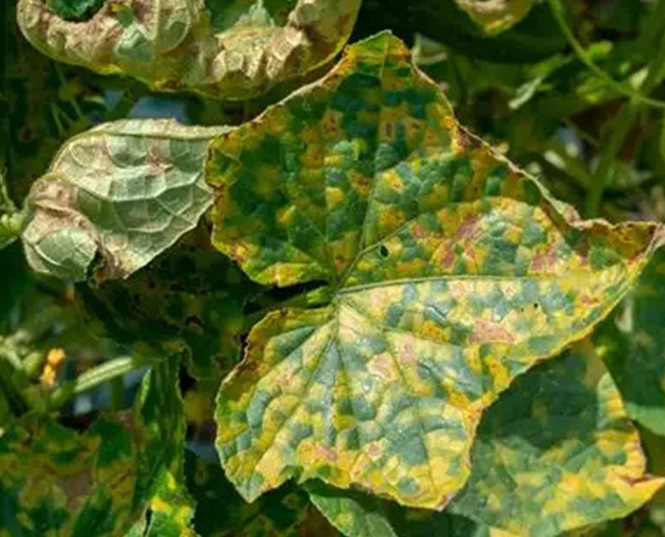
Downy Mildew
The downy mildew caused by Oomycetes, which is also an obligate parasitic fungus. The crops that often occur are sugarcane, soybean, grape, cucumber, tobacco and cucumber. Once not controlled in time, it will evolve into a destructive disease.
Symptoms:
Downy mildew generally starts from the lower leaves. At the beginning of the disease, it produces light green water stains, and the edge of the disease spot is not obvious. Later, it develops into yellow irregular disease spots. When the humidity is high, a gray white mold layer appears on the back of the leaves, and gradually becomes dark gray. When the shed is dry, the diseased leaves gradually turn yellow and dry, and when the air humidity is high, the diseased leaves become moldy.
Occurrence regularity:
The pathogen overwinters on the seed or lettuce in autumn and winter by the hyphae, or on the diseased remains by the oospores. It is mainly transmitted by airflow, watering, farming and insects. The spore germination temperature is 6~10 ℃, and the suitable infection temperature is 15~17 ℃. It is easy to get sick if the plants are too dense in the field, watered too early after planting, too large, the soil humidity is high, and the drainage is poor.