Potato Disease Treatment
1. Potato Black Shank
Potato Black Shank is caused by infection of Erwinia carotovora subsp. The disease can occur from the seedling stage to the late growth stage, and it mainly affects the base of the plant stem and tuber.
Symptoms:
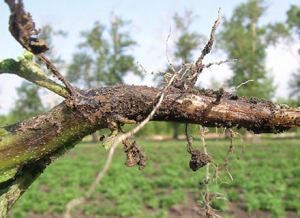
1. When the pathogen damages the seedlings, the plants are dwarfed, the leaves are chlorotic and yellow, the internodes are shortened or the leaves are rolled up, the tissues above the stem base are black and rotten and eventually wilt and die.
2. Potatoes cannot bear fruit or stop growing and rot after being infected, and the root system is not developed, which is easy to be pulled out of the soil.
3. The stems and tubers of the infected plants turn black, and the vascular bundles can be seen in the cross-section of the stems, turning brown.
4. After the seed potato is infected, it will rot into a sticky mass and will not germinate, or it will rot in the soil as soon as it germinates and cannot germinate.
Occurrence Regularity:
1. Potato black shank can be spread by seed tubers.
2. The incidence of potato black shank is related to temperature and humidity. When the temperature is high, the disease is severe, and poor ventilation or high temperature and humidity during storage are conducive to bacterial reproduction, often resulting in a large number of rotten potatoes.
3. Soils with high water content will accelerate the reproduction, spread and invasion of bacteria, so sticky soils and low-lying plots are seriously affected.
4. If the seed tubers are stacked together before sowing, it will not be conducive to the rapid formation of cork layer in the cut surface wound, which will increase the incidence of disease.
2.Potato Bacterial Wilt
Potato Bacterial Wilt is caused by infection of Pseudomonas solanacearum. Mainly damage leaves, stems and potato pieces.
Symptoms:
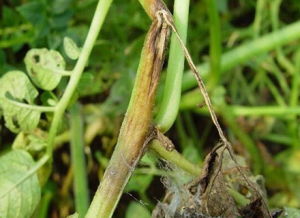
After the plant is infected with the pathogen, the lower leaves of the plant wither rapidly, the leaf veins turn brown, and the stems have brown streaks.
Infected potatoes turn brown after being cut, and in severe cases the inside of the potato is rotten and hollow.
Occurrence Regularity:
1. Diseased seed potatoes, soil, other susceptible plants (including weeds) and fertilizers are the infection sources of potato bacterial wilt.
2. Pathogens are released into the soil from diseased tubers, buds, roots and plant residues, and spread to healthy plants with rainwater, irrigation water, farming tools, and insects, and expand infection in the field.
3. The contact between the roots of the diseased and healthy plants will lead to the infection of the disease.
4. This diseases can spread in field soils with high water content, or when rain turns sunny, or when temperatures rise sharply.
3. Potato Late Blight
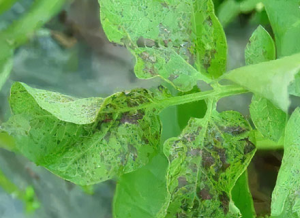
Potato Late Blight is caused by infection of Phytophthora infestans. The disease mainly affects potato stems, leaves and seed tubers. It can also infect flower buds and berries.
Symptoms:
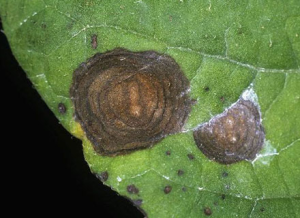
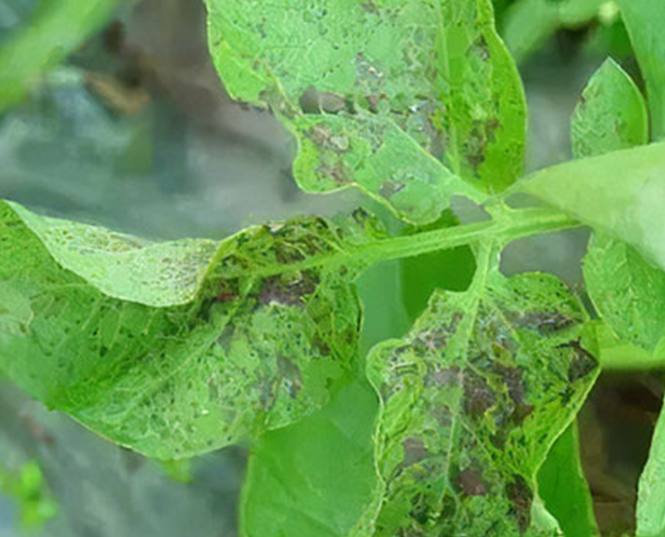
When the leaves are diseased, irregularly shaped yellow-brown spots form without neat boundaries. When the climate is humid, the lesions expand rapidly, the edges are water-soaked, and there is a circle of white mold. On the back of the leaves, there are dense white molds and mold rings. The lesions stop expanding when they are dry, the lesions become brown and brittle, and the edges of the lesions stop producing white mold.
Occurrence Regularity:
1. The mycelium of the fungus overwintered in the potato pieces.
2. If the seed tubers carries pathogens, it will cause no germination or die after germination. Some seedlings become diseased plants after germination. The diseased part produces sporangia, which are re-infected by airflow, forming a disease dissemination center, causing the disease to spread rapidly. The sporangia on the diseased leaves can also infiltrate into the soil with rainwater or irrigation water to infect potatoes, forming diseased potatoes and becoming the main source of infection in the following year.